
Wyoming fossils reveal Jurassic squid relative with unusually thick skeleton
Researchers identified Wyoteuthis linsterorum from two specimens and found evidence linking it to a family thought to have disappeared earlier.
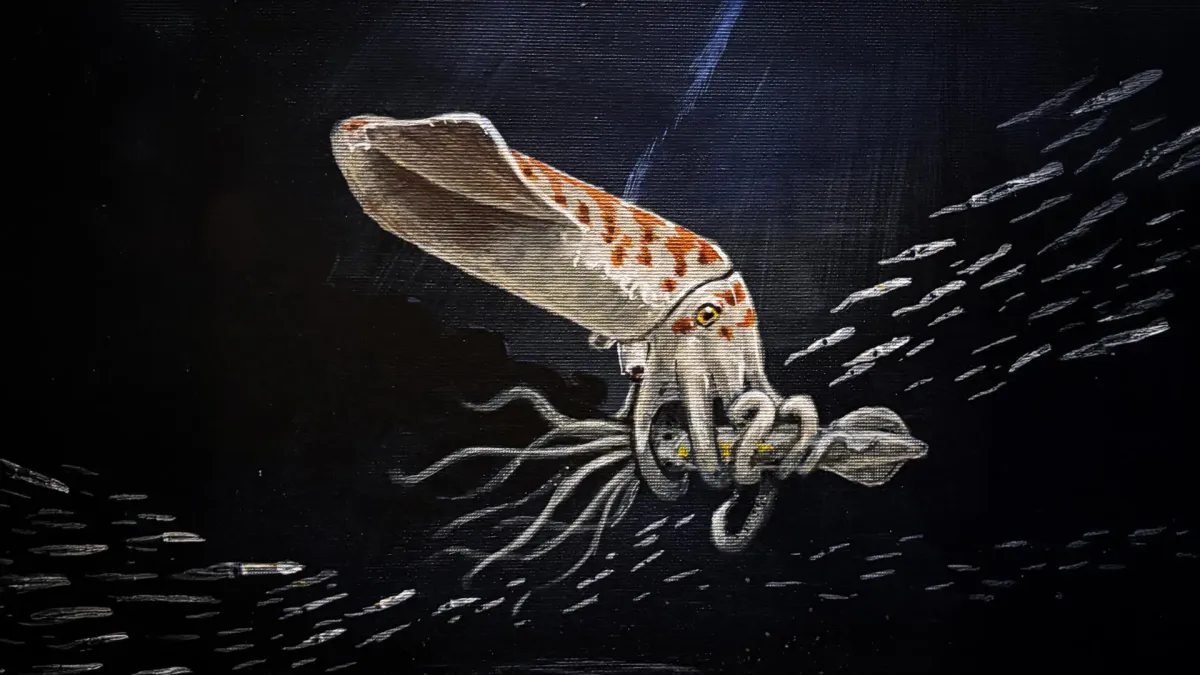
An international research team has identified a new species of belemnite from two Wyoming fossils dating to approximately 160 million years ago. Named Wyoteuthis linsterorum, the Jurassic animal had a barrel-shaped internal skeleton that researchers describe as the thickest known among these extinct relatives of squid and octopuses.
Its preserved skeletal structure, called a rostrum, is approximately 10 centimeters long and 6 centimeters wide. Most Wyoming belemnite fossils measure between 5 and 10 centimeters long but only 1 to 2 centimeters across. Researchers estimate the newly identified animal could have measured approximately 60 centimeters from its body through its arms.
The team examined the fossils using computed tomography, allowing them to study internal features without damaging the specimens. The scans indicated a connection with a belemnite family previously thought to have vanished millions of years before this species lived. The findings appeared in Papers in Palaeontology.
Wyoming Dinosaur Center founder Dr. Burkhard Pohl found the first specimen in the late 1990s, but it spent years in a museum drawer without being studied. Fossil collector Cliff Linster later found another near Ten Sleep, Wyoming, and donated it to the center in 2019. Comparing the two enabled researchers to formally identify the species.
The species name honors Linster and his family. Linster died in June, before publication of the research. Both specimens are displayed at the Wyoming Dinosaur Center in Thermopolis, Wyoming.