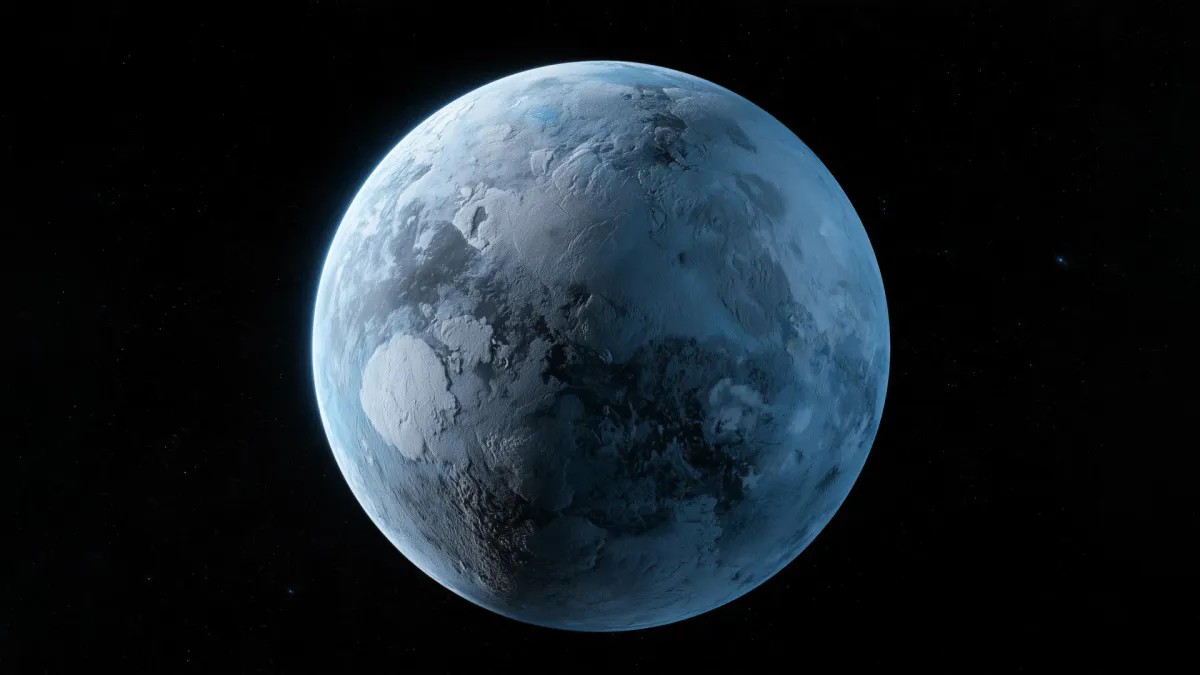
Study links Uranus and Neptune’s unusual magnetism to electrical conductivity
Computer simulations suggest the planets’ magnetic axes could shift by tens of degrees within decades, but observations have yet to confirm those changes.
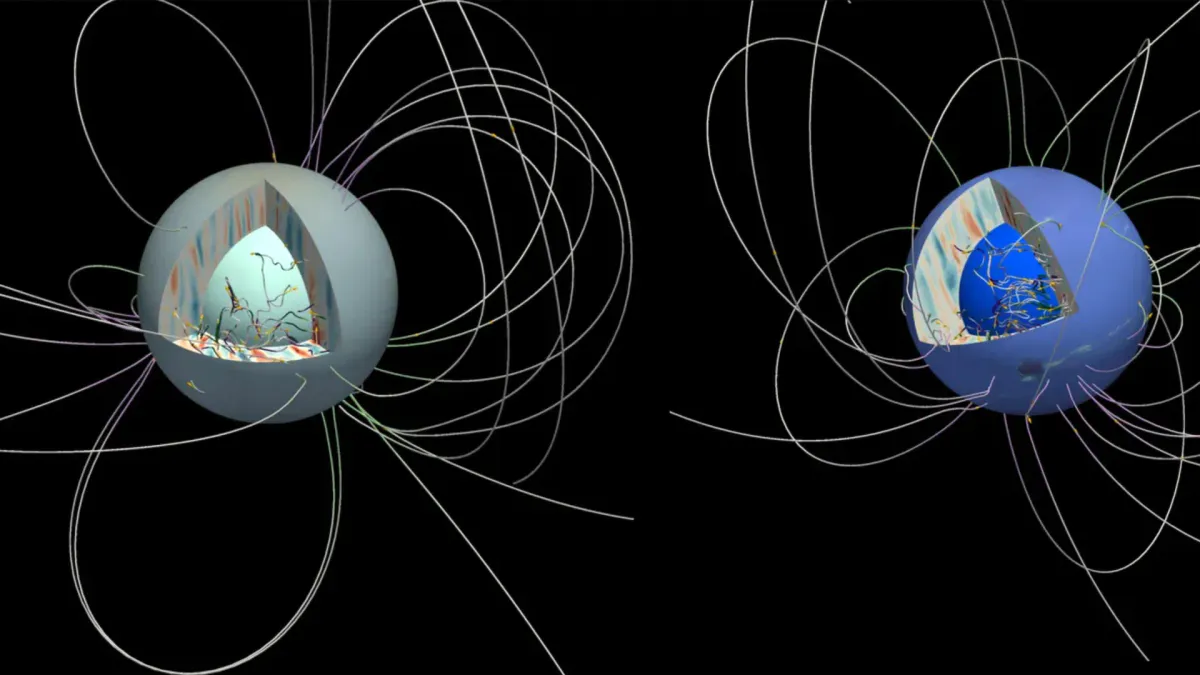
Materials that conduct electricity more readily at greater depths could help explain the distorted magnetic fields surrounding Uranus and Neptune, according to a study led by researchers at The University of Texas at Austin. Their simulations also suggest that the fields may undergo substantial changes within decades.
Published in Communications Physics, the research examines a puzzle dating to NASA’s Voyager 2 encounters with the planets in the 1980s. The spacecraft measured magnetic dipole tilts of 59 degrees at Uranus and 47 degrees at Neptune, compared with Earth’s 11 degrees.
The team modeled planetary interiors in which electrical conductivity rises with depth, testing different structures and interactions among fluid circulation, temperature and magnetic forces. Lead author Chi Yan, a research associate at the UT Jackson School of Geosciences, said extreme heat and pressure could break water molecules into electrically charged ions, increasing conductivity.
In some simulations, the magnetic tilt changed by tens of degrees over decades; in others, it moved only slightly. Those results are predictions, not observed changes, and suggest that the planets’ fields may now differ substantially from Voyager 2’s measurements.
Researchers are examining infrared images from the James Webb Space Telescope for evidence in auroras and the electrically charged upper atmosphere. They hope to compare those observations with Voyager 2 data and the simulations. The researchers say new spacecraft missions will still be needed to fully understand the planets’ interiors.