
Seaweed may have helped feed coastal dinosaurs, fossil study finds
Carbon signatures suggest ocean nutrients reached prehistoric land animals, though one plant-eating dinosaur showed a different dietary pattern.
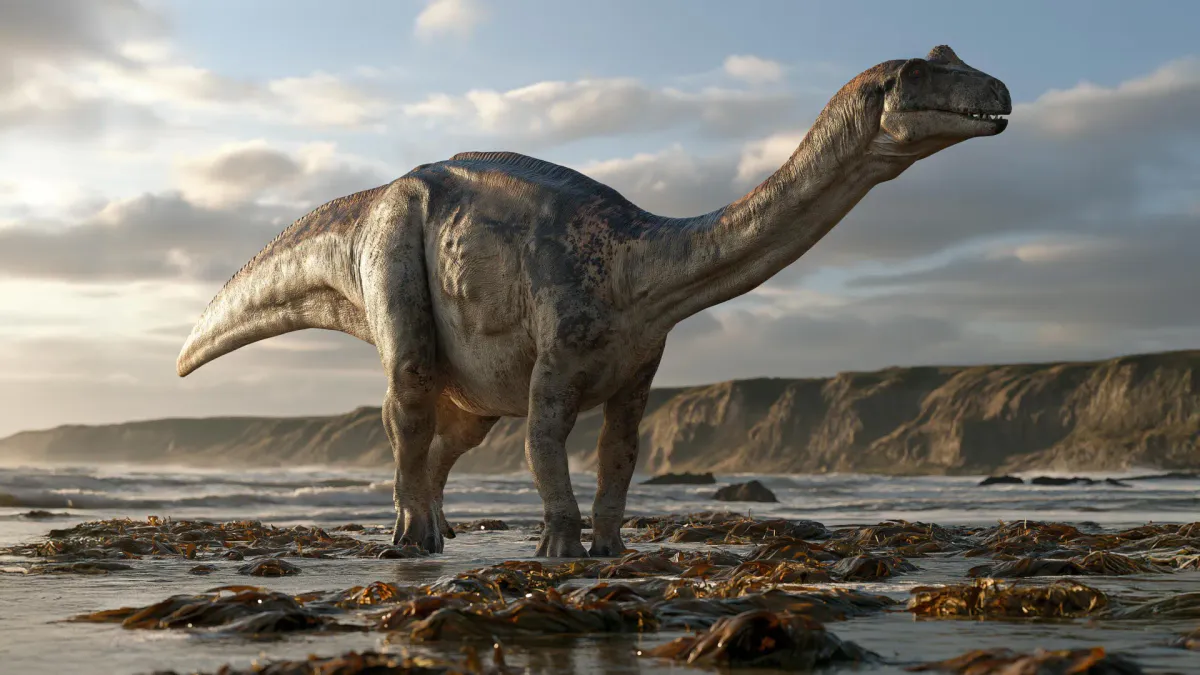
Some dinosaurs that inhabited coastal areas may have supplemented their diets with seaweed, according to research examining carbon preserved in fossils. The study suggests that food originating in the ocean supported both plant-eaters and other animals in Cretaceous ecosystems.
Researchers compared fossils collected near the ancient Gulf of Mexico shoreline and Western Interior Seaway with specimens from farther inland. The deposits dated to the early Albian, around 113-107 million years ago, and early Cenomanian, approximately 100-96 million years ago. Their findings appeared in Frontiers in Ecology and Evolution.
Coastal specimens consistently showed higher carbon isotope values than inland specimens. Those coastal measurements were similar despite differences in latitude and age. First author Dr. Clayton Forster, a University of Arkansas geologist, said the chemical evidence indicated that marine nutrients moved through food chains and became incorporated into animal bones and teeth.
The researchers identified seaweed as the likeliest explanation because the additional food source needed to reach animals at different levels of the food chain and remain available along coastlines over millions of years. However, the plant-eating dinosaur Tenontosaurus tilletti had tooth enamel readings consistent with a diet based on land plants, suggesting it did not depend on marine food.
The geographic reach of the findings remains uncertain. The samples did not cover polar or equatorial regions during either interval, and further research is needed to determine whether similar feeding relationships existed in other geological periods.