Spinosaurus was largely aquatic, fossil study suggests
An analysis of skeletal proportions supports a mostly submerged existence for the dinosaur, but leaves questions about its hunting behavior unresolved.
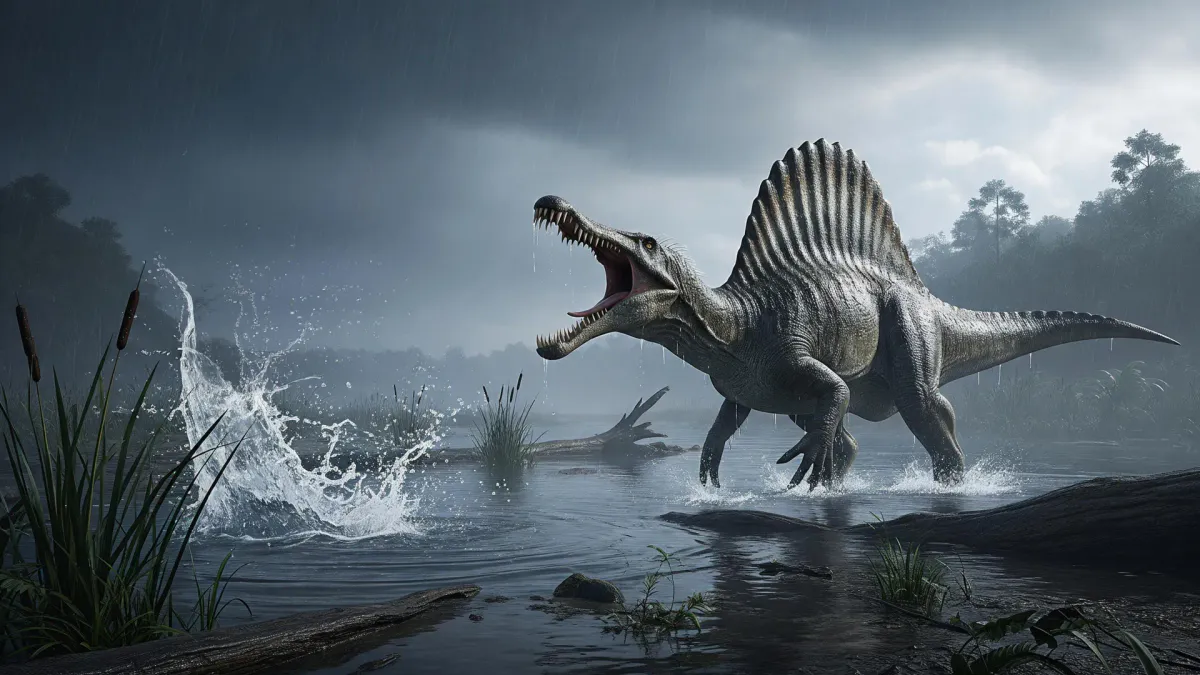
A Yale University research team has found evidence that Spinosaurus lived predominantly underwater. The findings, published in Current Biology, favor a highly aquatic interpretation of the dinosaur’s habits without conclusively establishing whether it hunted beneath the surface.
The dinosaur inhabited northern Africa approximately 113 million to 94 million years ago. Researchers have disagreed over whether it chased prey while submerged or searched for food in shallow waters and along shores. Lead author Caleb Gordon said the new results could lend weight to the underwater-hunting interpretation.
To investigate how extinct animals used water, the team assembled photographs, CT scans and more than 11,000 measurements from hundreds of modern and fossil specimens. Machine learning models used relationships between body proportions and the habits of living species to estimate the lifestyles of extinct ones.
The results pointed to a less aquatic existence for mesosaurs, marine reptiles dating from between 290 million and 274 million years ago. Their limb proportions suggested regular movement onto land. The researchers also inferred that no Paleozoic marine reptiles had abandoned land entirely.
Forelimb measurements were especially informative: the models exceeded 90% accuracy when predicting soft tissue flippers and highly or fully aquatic lifestyles. The analysis also adapted a World War II statistical method to assess swimming adaptations that might not be directly preserved in fossils.