Study points to medieval abbot in Westminster Abbey’s Roman coffin
Radiocarbon testing dates the remains to 987 to 1052 AD, consistent with the deaths of two former abbots identified as possible occupants.
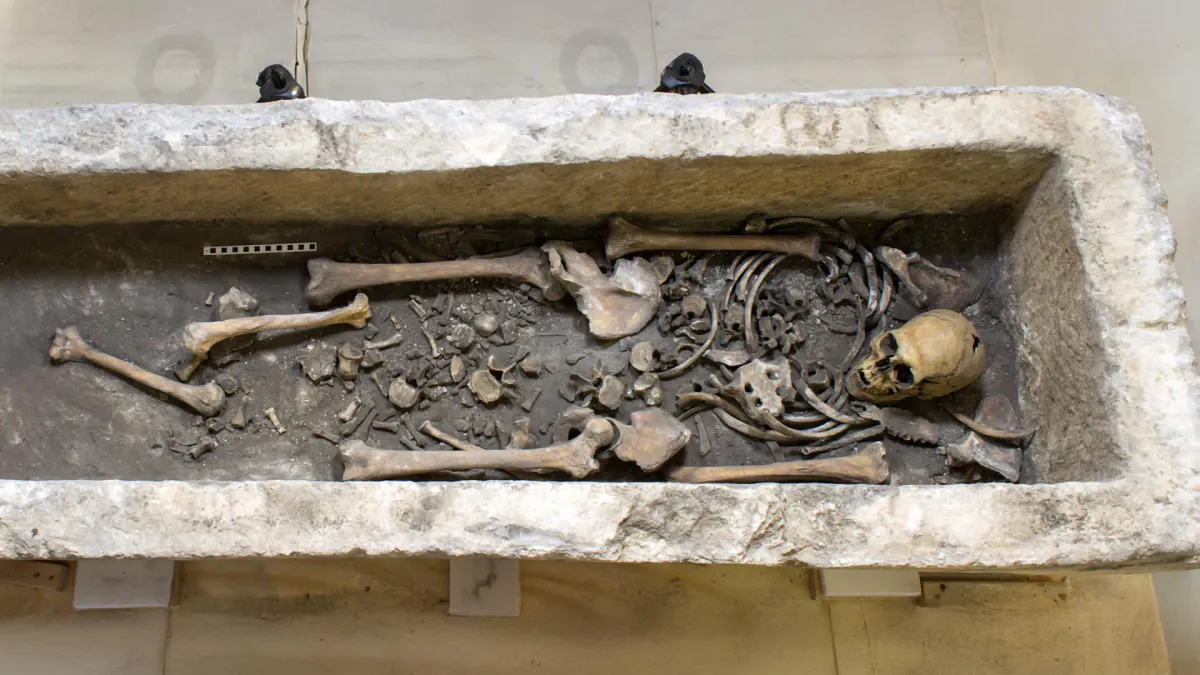
A skeleton inside a Roman sarcophagus at Westminster Abbey may belong to one of two medieval abbots, according to research by Professor Warwick Rodwell, the Abbey’s Consultant Archaeologist. He considers Aelfwig, who died around 1020, the stronger candidate, with his successor Wulnoth, who died in 1049, another possibility.
The findings appeared in the Journal of the British Archaeological Association. Radiocarbon analysis by the Scottish Universities Environmental Research Centre dated a bone sample to 987 to 1052 AD, supporting Rodwell’s conclusion that the Roman container was reused during the late Saxon period.
An inscription on the limestone coffin names Valerius Amandinus, a wealthy Briton who lived in London between 300 and 400 AD. But its lid bears a Latin cross dated to approximately the 10th or 11th century, indicating a later burial.
A new assessment by Pre-Construct Archaeology human bone specialist James Young Langthorne identified the remains as those of a man aged 35 to 49, approximately 5 feet 9 inches tall. Rodwell said the elaborate burial would be consistent with an abbot’s status. Aelfwig had been a Westminster monk before leading the monastery.
Researchers had believed the skeleton was missing until the coffin was opened at a conservation studio in 2016, revealing nearly complete remains. A rectangular lime residue inside the sarcophagus also marked what Rodwell interprets as a decayed wooden coffin. The man’s identity remains unconfirmed.