
Nobel laureate Soai discusses molecular asymmetry at Tokyo lecture
About 2,000 people attended in person or online as the Japanese chemist outlined his research and plans for a lecture in Stockholm.
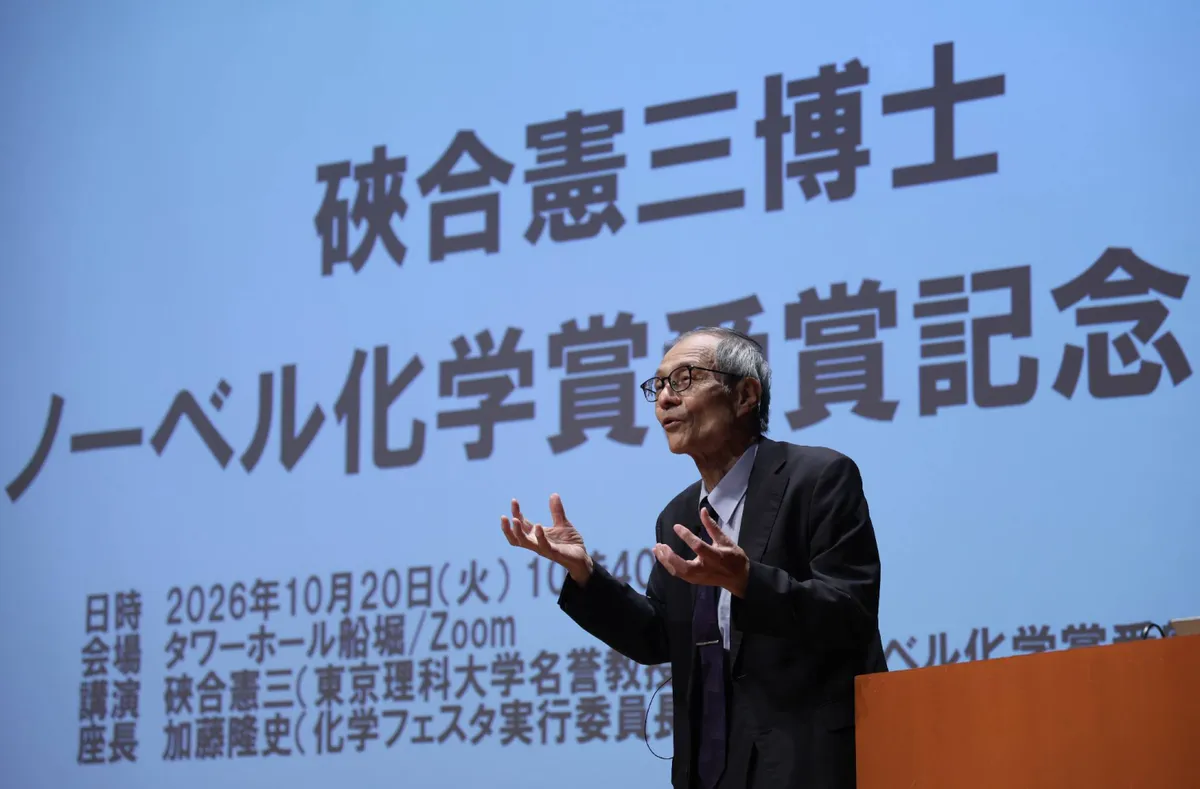
Kenso Soai, the Japanese scientist awarded the 2026 Nobel Prize in Chemistry, spoke in Tokyo about the molecular reaction bearing his name at an event attended by about 2,000 people, including online participants.
The Chemical Society of Japan hosted the lecture by Soai, 76, a professor emeritus at the Tokyo University of Science. His subject was asymmetric autocatalytic reaction, the research behind his Nobel award.
Known as the Soai reaction, the process magnifies a small initial imbalance between molecular forms that mirror each other, like a pair of hands, until one form becomes dominant. Soai's first findings leading to the reaction were published in 1990.
During questions, Soai said he wanted to investigate possible origins of those molecular imbalances. At a subsequent news conference, he described an interest in fundamental questions as the motivation for his work.
Soai hopes to attend December's Nobel award ceremony in Stockholm. For his planned lecture there, he intends to discuss his findings and recognize contributions from Louis Pasteur, the 19th-century French chemist and microbiologist who also investigated molecular asymmetry.