Warm refuges may explain crocodiles’ survival after asteroid impact
A UCL-led study suggests equatorial habitats could have sheltered crocodile relatives after the impact that wiped out most dinosaurs.
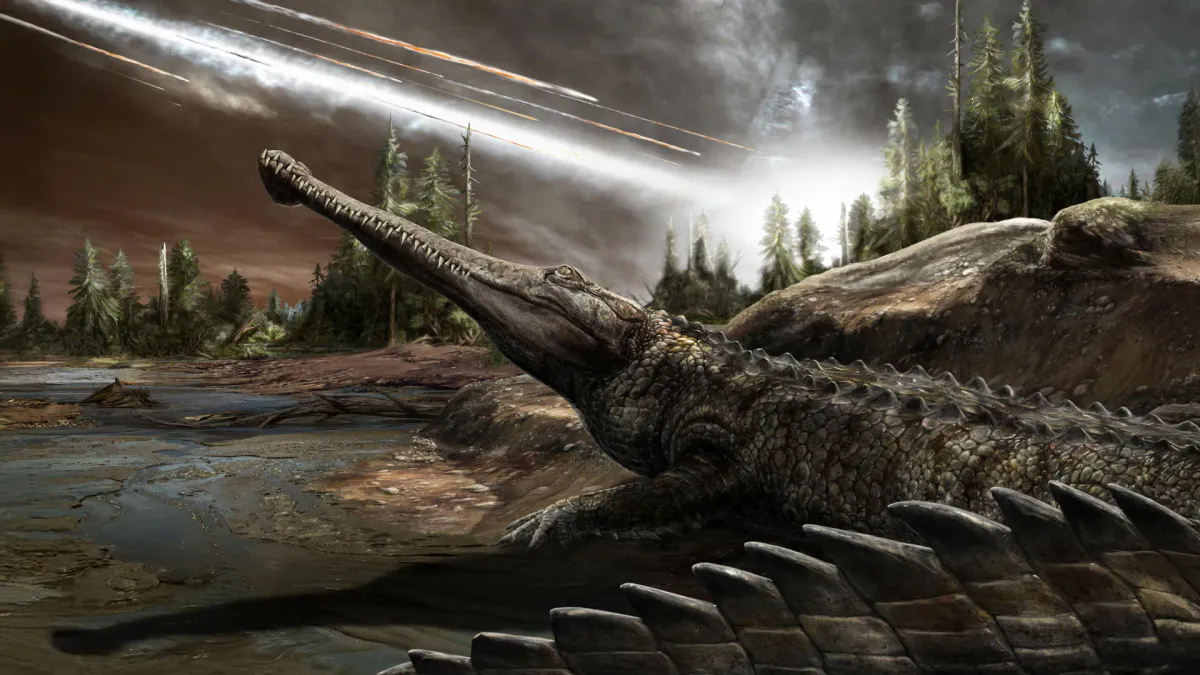
Crocodile relatives may have survived the asteroid impact 66 million years ago partly because their preference for warmth placed them in regions that remained habitable, according to research led by UCL (University College London). Climate simulations suggest areas around the equator could have supported surviving populations as conditions elsewhere deteriorated.
Published in Science Advances, the study examined more than 7,000 fossils alongside records covering over 400 extinct and living species. The researchers combined that evidence with computer reconstructions spanning 245 million years of Earth’s geography and climate to assess where suitable habitats existed.
The team found that crocodile relatives generally shifted their ranges to follow warm conditions rather than evolving to tolerate substantially different temperatures. They spread into higher latitudes during hotter periods, including Antarctica, and retreated toward tropical regions as the planet cooled.
In simulations of conditions after the asteroid strike, reducing sunlight by 5% or 10% still left suitable equatorial habitats. A 15% reduction made those areas unsuitable too, although the researchers said that extreme scenario is now considered unlikely. Earlier modeling by members of the team found a much sharper contraction in suitable habitat for non-avian dinosaurs.
The researchers cautioned that temperature was probably only part of the explanation. They said relatively small bodies, partly aquatic lifestyles, varied diets and low energy needs likely also helped crocodile relatives survive.