
Study suggests coral-eating starfish may support reef diversity
Researchers found living coral tissue remained after nearly 75 percent of feeding events observed in protected areas of the Great Barrier Reef.
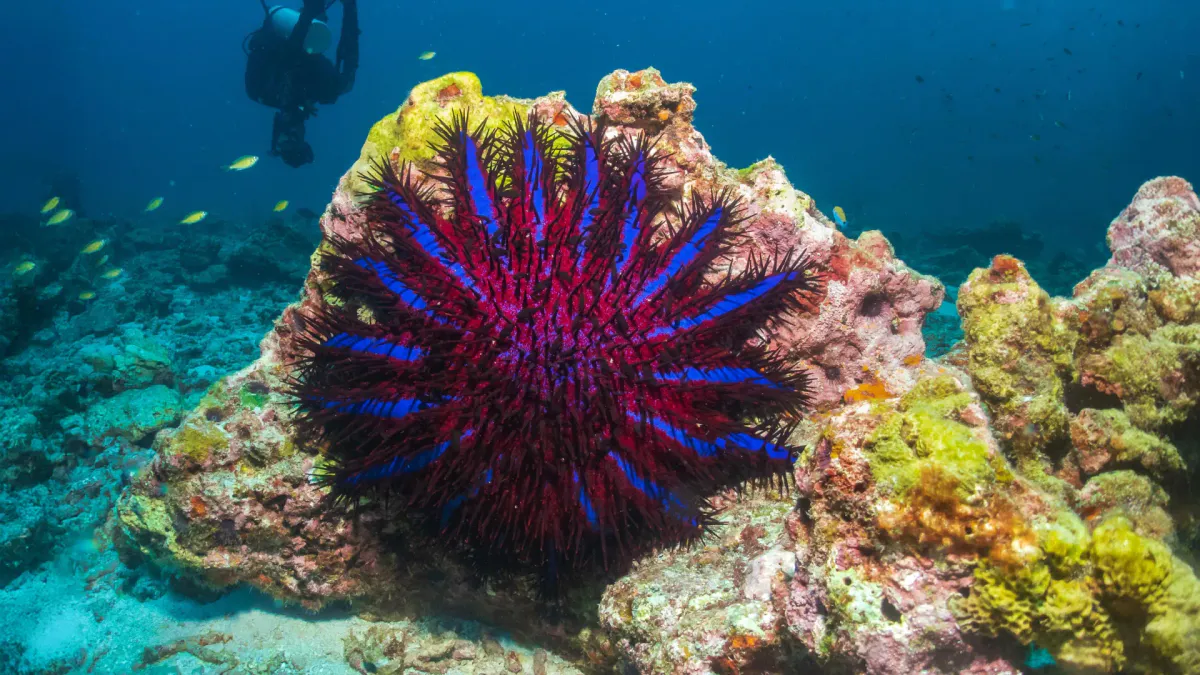
Crown-of-thorns starfish may help sustain coral diversity when their numbers stay low, University of Sydney researchers have found. Their study suggests the predators can leave space for slower-growing corals by feeding on faster-growing species, though large outbreaks remain destructive.
Published in Ecology and Evolution, the research examined damage from feeding and surviving coral tissue at the university’s One Tree Island Research Station on the Great Barrier Reef. The work focused mainly on protected areas where healthy fish populations help limit starfish numbers.
The team, led by Dr. Shawna Foo, found that nearly 75 percent of feeding events left some coral tissue alive. Foo, a Horizon Fellow at the university’s School of Life and Environmental Sciences, said the starfish appeared to eat a relatively consistent amount before moving elsewhere, rather than consuming whole colonies.
Surviving pieces of fast-growing Acroporidae corals did not grow back across the damaged areas. Regrowth was concentrated instead among slower-growing Montipora and Porites corals. The researchers suggested this feeding pattern may prevent dominant corals from crowding out other species.
The researchers cautioned that population outbreaks can still destroy extensive coral areas. Their findings suggest complete removal may not be the appropriate goal after an outbreak is suppressed, and that culling should be accompanied by marine management that protects the starfish’s natural predators.