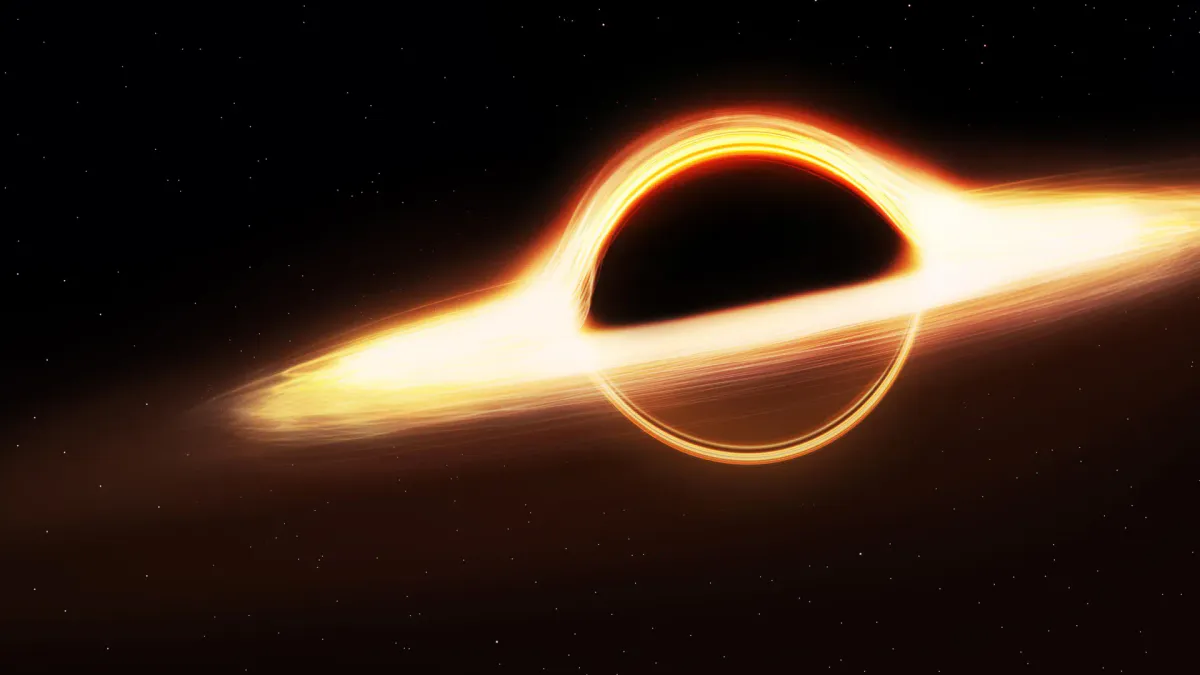
Study models how a tiny black hole could destroy a star from within
Researchers say radiation from the predicted explosions could offer a way to search for primordial black holes, whose existence remains unconfirmed.
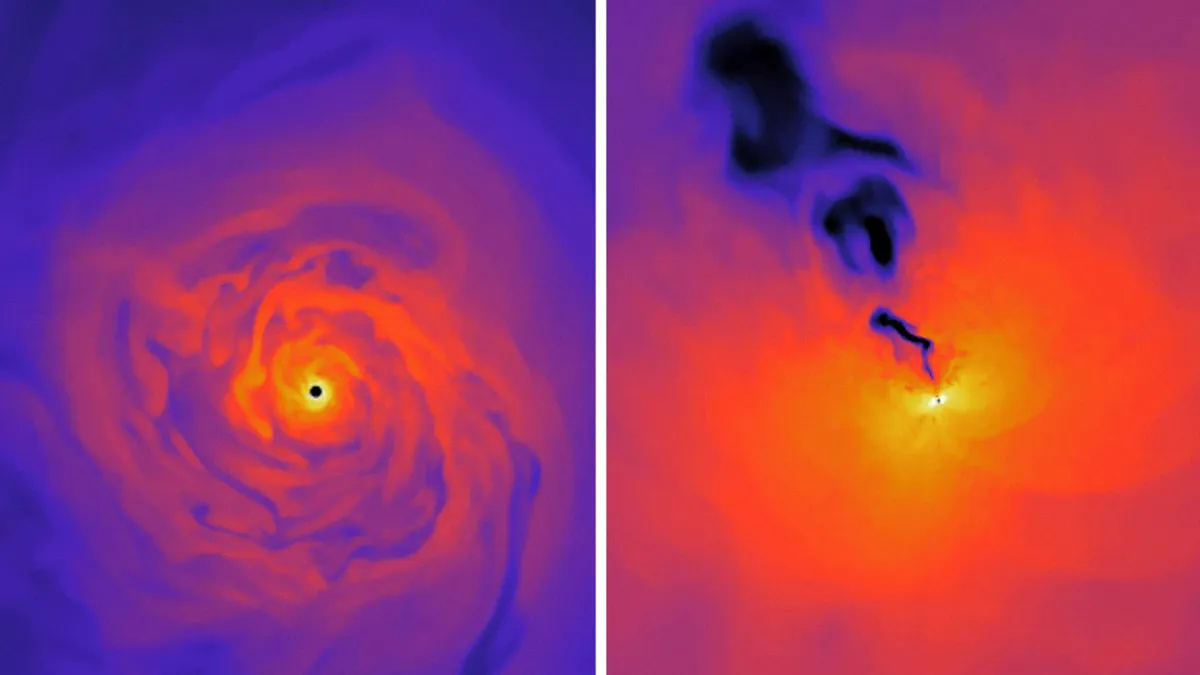
A team involving MIT researchers has calculated how a hypothetical primordial black hole could consume a star internally and eventually trigger an explosion. Their theoretical work and three-dimensional simulations suggest that existing telescopes might detect the resulting radiation, offering a possible way to search for these unconfirmed objects.
The Astrophysical Journal published the study, led by Ore Gottlieb, an assistant professor of physics at MIT. Primordial black holes may have originated shortly after the Big Bang and could account for some dark matter. Some surviving examples could be atom-sized yet have a mass comparable to an asteroid.
The researchers modeled an encounter involving a star resembling the Sun. They found that a lone star generally could not retain a passing black hole, but a companion star or planet could help trap it. Repeated passages through stellar material could drain the black hole's orbital energy, allowing it to reach the core over thousands or millions of years.
The simulations suggest the black hole could then consume approximately 1 percent of the star's mass over several million years. If stellar rotation were sufficiently fast, infalling gas could collect in a disk. The interaction could produce powerful jets, destroying the star within a few dozen seconds.
The predicted emissions could include X-rays, gamma rays, blue and ultraviolet light, followed by optical, infrared and radio signals. However, similar radiation can come from other cosmic events. The researchers said astronomers would need additional evidence, including the star's characteristics, before attributing an explosion to a primordial black hole.