
Black hole study points to stars that may have collapsed without exploding
Researchers found a shortage of black holes between 12 and 16 solar masses, alongside similarities in the rotation of a more common group.
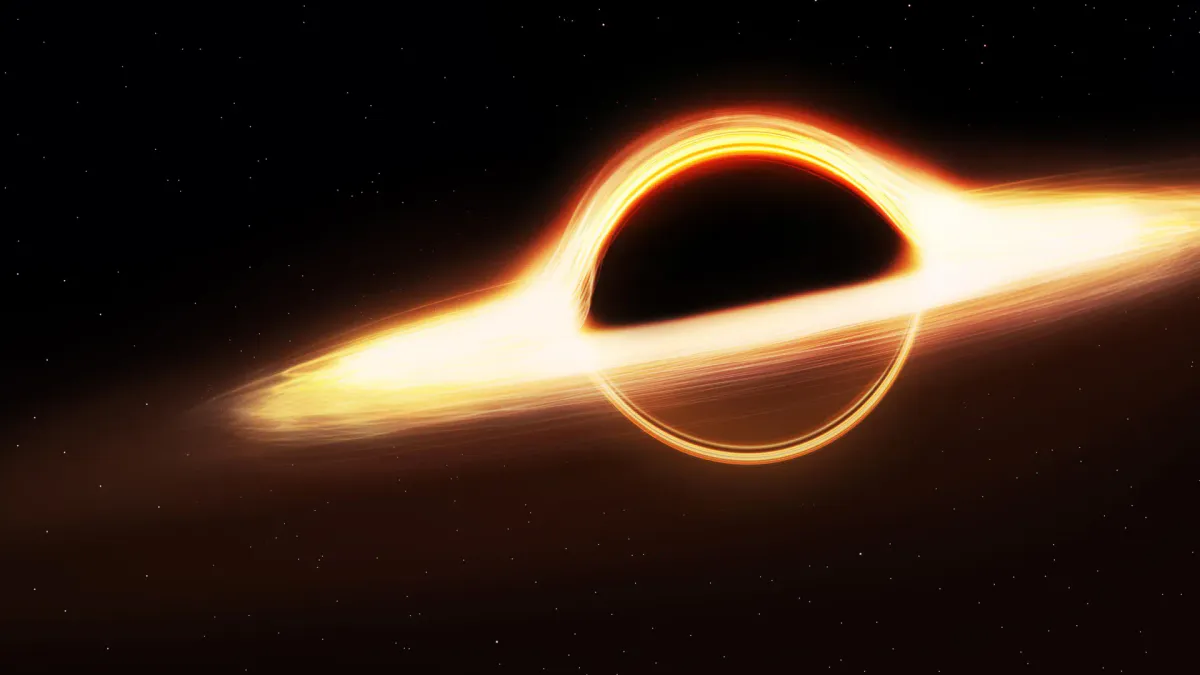
An analysis of 257 black hole mergers has found evidence consistent with some massive stars becoming black holes without exploding, according to researchers led by Caltech. The team identified patterns in mass and rotation that could indicate a population with a common origin, but the results do not confirm the existence of failed supernovae.
Using observations from the LIGO, Virgo and KAGRA gravitational wave detectors, the researchers found that about three-quarters of the mergers included black holes weighing roughly 10 times the Sun’s mass. Objects between 12 and 16 solar masses were comparatively scarce. The team reported that this was the first detection of such a distinct gap in the distribution of black hole masses.
The black holes around 10 solar masses also had a narrower spread of rotation rates than the broader population. Combined with the mass findings, that pattern suggests they may have formed through a shared process, possibly the direct collapse of stars without supernova explosions.
Published in Physical Review D, the study was led by Caltech physics professor Katerina Chatziioannou. Lead author Isaac Legred, now a postdoctoral researcher at the University of Illinois Urbana-Champaign, said more research is needed. Astronomers have not confirmed an individual failed supernova, which may leave little visible evidence.