
New Amazon killifish faces habitat threats at all three known sites
Researchers say Laimosemion laranja could qualify as Endangered and recommend extending a nearby reserve to protect its habitat.
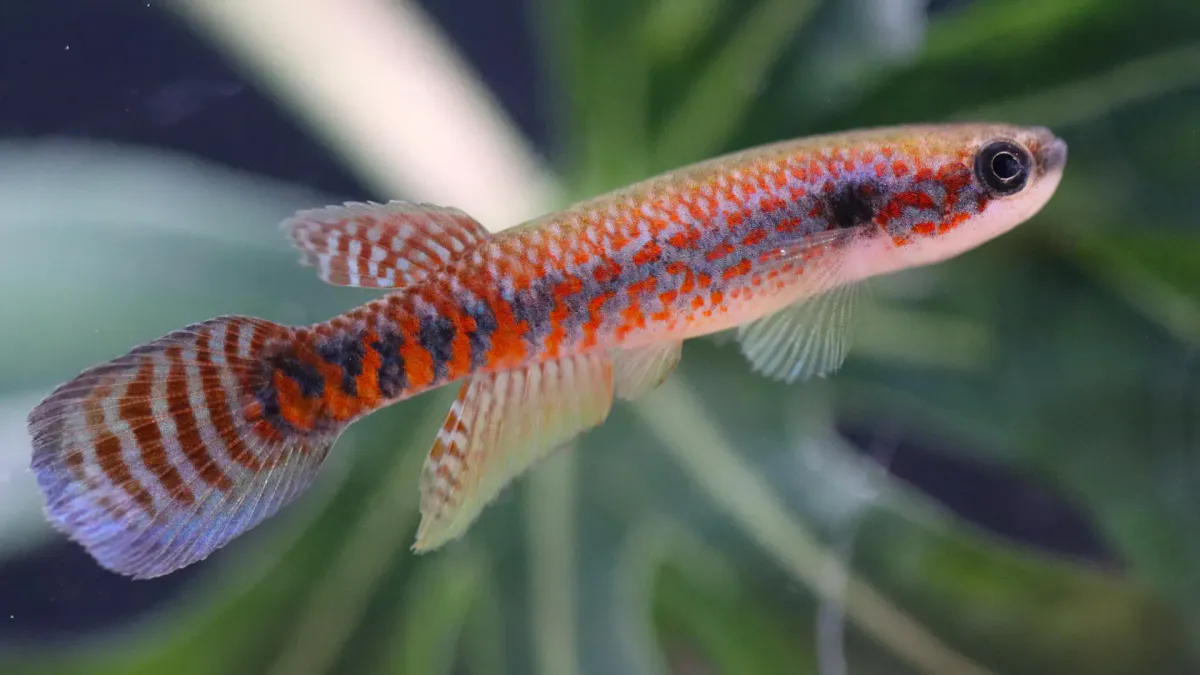
Scientists have identified a new killifish species in Brazil’s Amazon whose known habitat is limited to three small forest pools affected by environmental disturbance. The researchers say Laimosemion laranja meets the criteria for Endangered status under International Union for Conservation of Nature (IUCN) guidelines.
The pools lie near Laranjal do Jari in the northern Brazilian state of Amapá. Researchers estimate the fish’s known range at just 25 square kilometers, with deforestation, mining and urban development placing pressure on its habitat. Mining sediment has discolored water near one pool, while another lies inside the city, where plastic pollution affects the environment.
The team encountered the fish while studying freshwater fish life cycles in the Rio Cajari drainage. To establish that it was a distinct species, they compared its anatomy with related fish and analyzed mitochondrial DNA. Their findings appeared in Zoosystematics and Evolution, an open-access journal.
Measuring less than three centimeters in standard length, the fish has distinctive markings: males display orange spots toward the front of the body and orange chevrons closer to the tail. Its name refers both to the Portuguese word for orange and to the municipality where it was discovered.
The researchers recommend enlarging the nearby Rio Cajari Extractive Reserve to bring the fish’s habitat within its boundaries. The team included scientists from institutions in Brazil and the University of West Florida.