Colombian fossils suggest evolutionary shifts need not follow mass extinction
Researchers propose a model in which declining animal lineages coexist with expanding groups, based on fossils from Colombia’s Paja Formation.
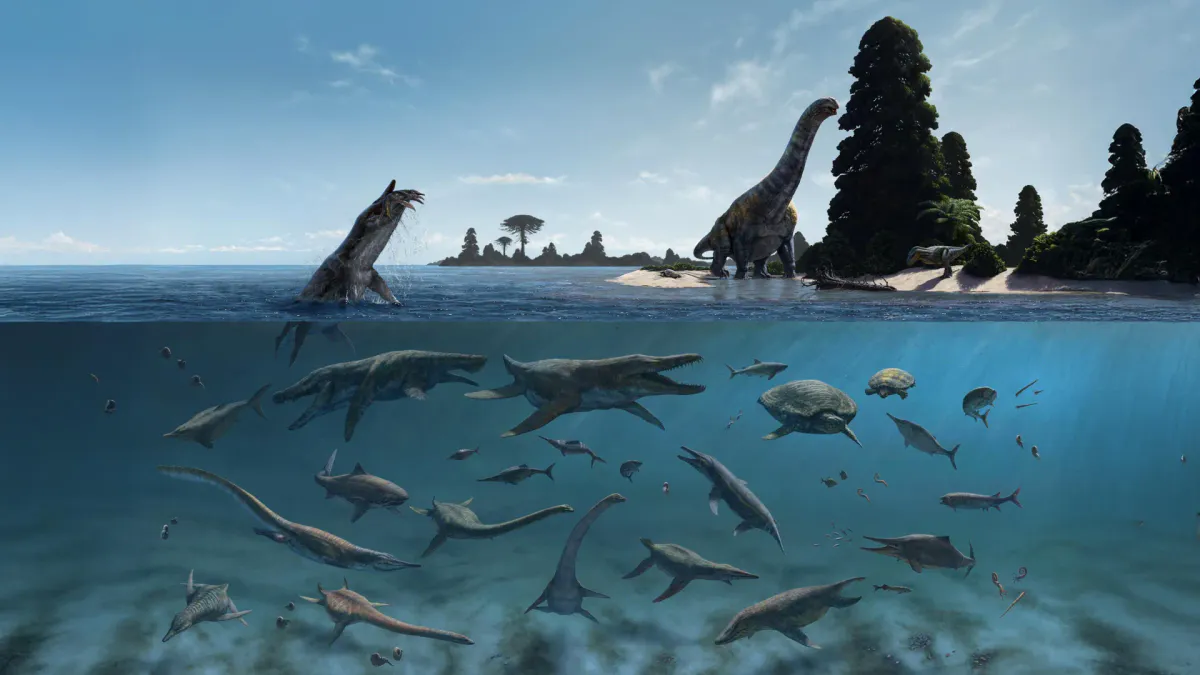
Fossils from central Colombia suggest that major evolutionary changes may occur through periods of coexistence rather than mass extinction, researchers from McGill University and the Centro de Investigaciones Paleontológicas (CIP) report. Their findings show older animal lineages nearing extinction sharing an ecosystem with newer groups beginning to diversify.
McGill biology professor Hans Larsson and PhD graduate Dirley Cortés call the proposed pattern a “Biotic Inflection.” They identified it in the Early Cretaceous Paja Formation near Villa de Leyva, where fossils preserve both surviving Jurassic lineages and emerging Cretaceous groups.
The researchers suggest that warm temperatures, high sea levels and nutrient-rich coastal waters may have helped these animals coexist. Developing ocean passages linking the eastern Pacific with the early Atlantic through present-day Colombia likely also contributed to the ecosystem’s diversity.
The fossil assemblage includes long-necked plesiosaurs, relatives of marine crocodiles, turtles, sharks and crustaceans. Most specimens collected from the formation are held at CIP. An earlier study reconstructing feeding relationships found a complex food web with an unusually wide range of top predators.
The researchers caution that the proposed model needs further testing. More fossils, more precise dating and comparisons with formations elsewhere would help establish whether similar transitions occurred in other places and how common they were throughout Earth’s history.