Japan debates food tax cut as opposition pushes cash payments
The proposal would cut the rate from 8% to 1% for two years starting in April 2027, alongside income-linked support for workers.
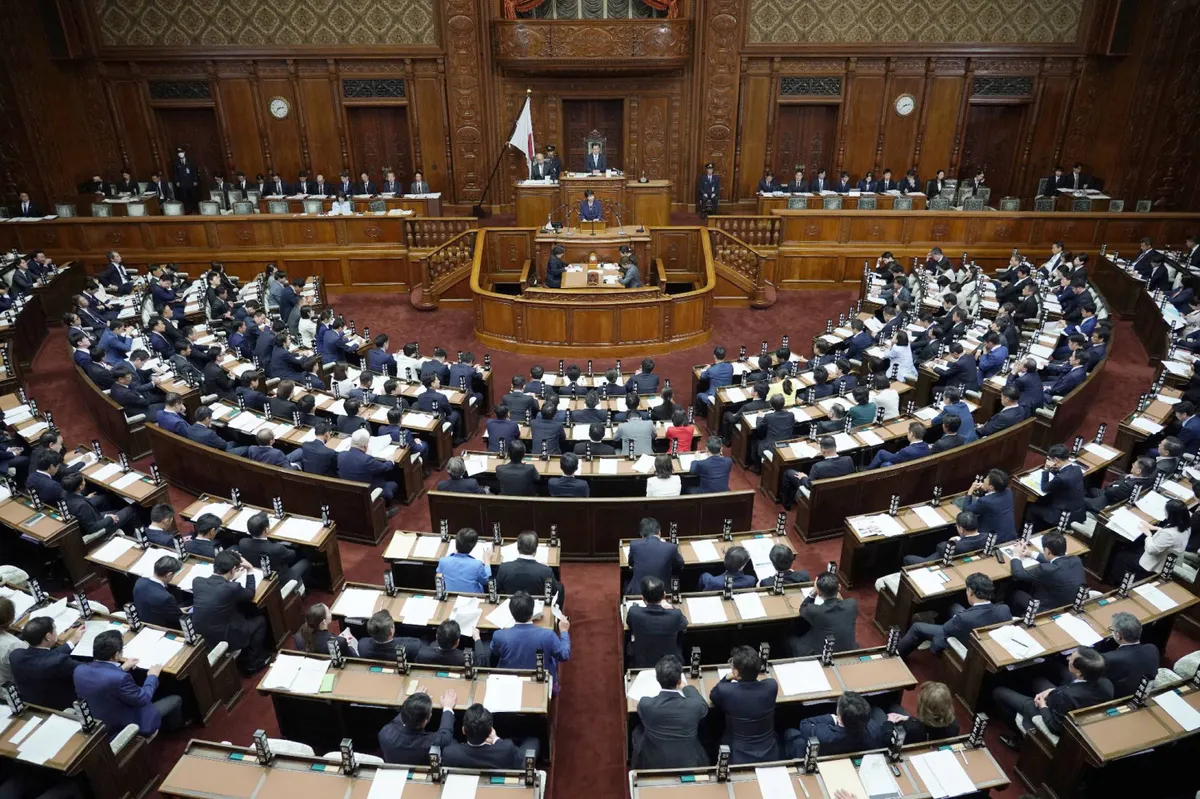
Japan’s parliament has opened debate on Prime Minister Sanae Takaichi’s proposed temporary food tax reduction, with opposition parties questioning its impact on prices and proposing cash payments or larger income tax deductions instead.
The bill would apply a 1% consumption tax to food and nonalcoholic beverages for two years beginning in April 2027, replacing the current 8% rate. The rate would revert to 8% in April 2029. Income-linked payments would also help workers on low and middle incomes cover the tax burden that remains.
During the Lower House debate, Kazuhiko Shigetoku of the Democratic Reform Party argued that direct payments could provide quicker, more dependable assistance. He cited expert warnings that prices might not decline by the full tax reduction and that businesses could increase prices before it begins.
Takaichi said the reduction would generally be reflected in prices, while acknowledging other influences on food costs. She ruled out switching to cash payments in the current fiscal year, saying nationwide delivery to all eligible recipients would be difficult before the year ends in March.
Komeito proposed redirecting the roughly ¥10 trillion required for the government’s two-year package into payments of about ¥80,000 per person over that period. The Democratic Party for the People favors higher deductions to lower income and resident taxes, together with payments for lower-income workers. It also proposed roughly ¥50,000 in payments to low- and middle-income workers during the current fiscal year.
DPP lawmaker Satoshi Asano warned that middle-income workers could lose the tax-cut benefit after two years without qualifying for replacement assistance. Takaichi rejected describing restoration of the original rate as an added burden and said payment amounts and eligibility thresholds were still being considered.
A Yomiuri Shimbun poll found 56% supported the legislation and 37% opposed it. A Sankei-FNN survey recorded 62.6% support for the food tax cut, but 52.2% doubted its effectiveness against rising prices.