
Asteroid’s temperatures raise questions about unexplained acceleration
Hayabusa2 is expected to visit 1998 KY26 in July 2031, offering an opportunity to investigate the small asteroid’s unusual behavior.
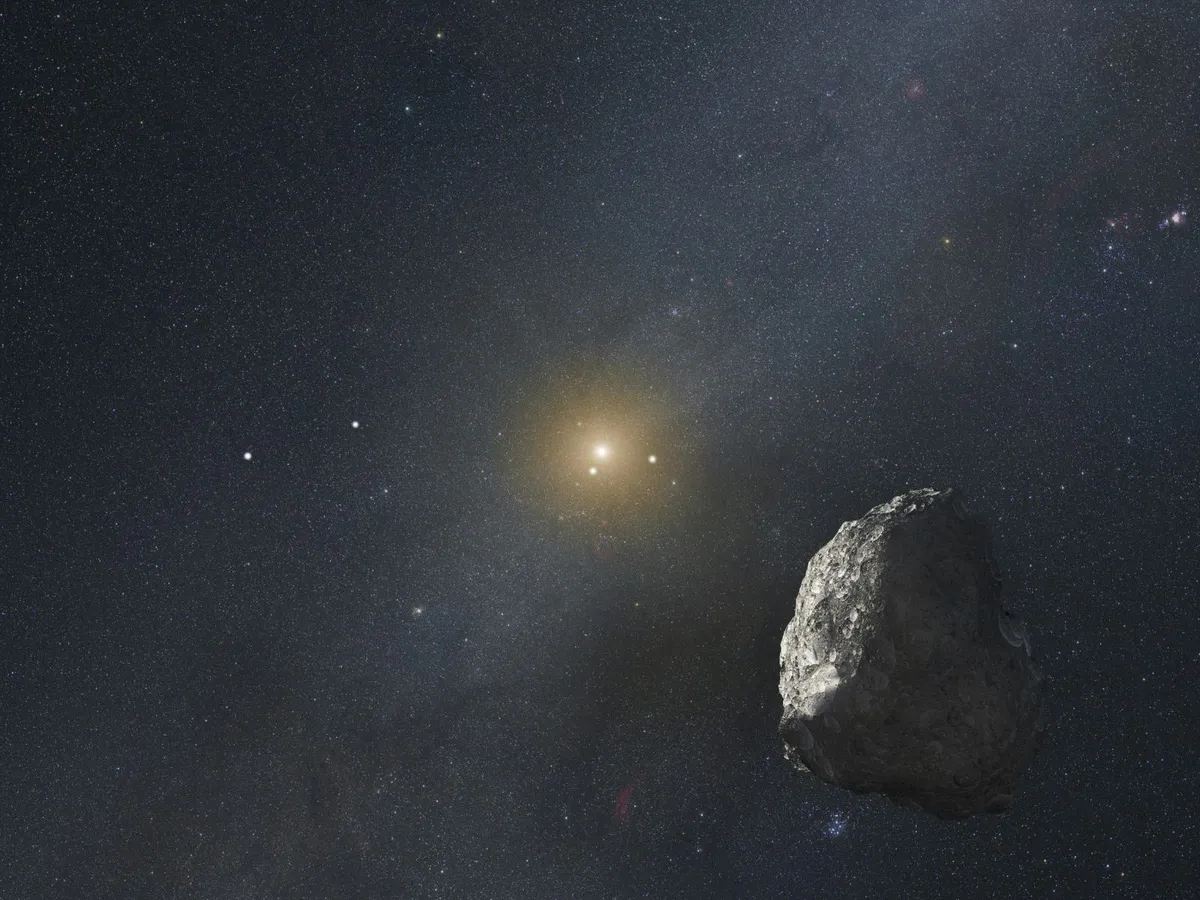
Temperature findings are challenging a possible explanation for the unexpected acceleration astronomers observed in asteroid 1998 KY26 in 2023. Researchers found that conditions on the object appear too warm for water ice to persist over long periods, raising questions about whether escaping gas could explain its motion.
Some scientists have considered whether the asteroid could instead be a dark comet. Such objects have no telescope-visible tail, yet their motion can accelerate for reasons other than gravity. Ice changing directly into gas is one possible cause.
The researchers reported that average temperatures in even the coldest parts of 1998 KY26 reach at least -78 °F (-61 °C). Long-term preservation of water ice requires temperatures below approximately -198 °F (-128 °C). They also found that ice powering the acceleration would be depleted within 62 years, whereas the object appears several billion years old.
Japan’s Hayabusa2 probe should arrive in July 2031, carrying ONC-W and ONC-T cameras and a Lidar laser altimeter to examine the asteroid. Discovered through the Spacewatch project at the University of Arizona, the Apollo-class object is about 11 meters across and follows an orbit that crosses Earth’s.