
Prehistoric keepsakes may have helped shape human memory, study suggests
Researchers examining objects from Israeli archaeological sites propose that early humans may have collected souvenirs 500,000 years ago.
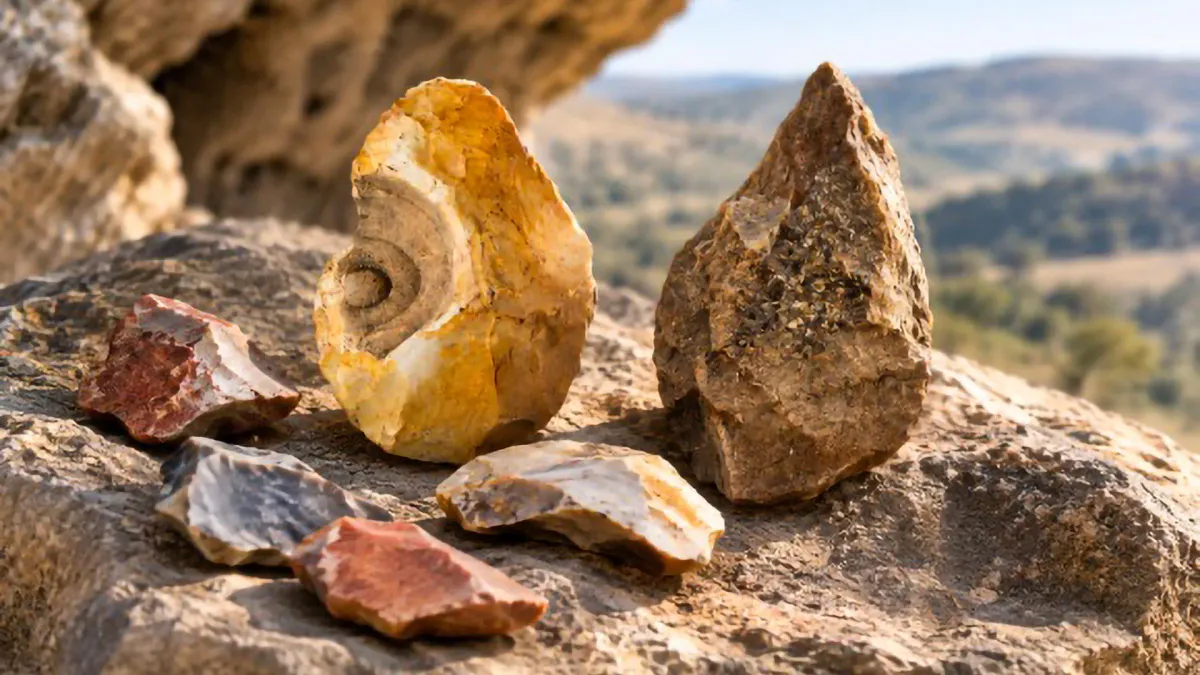
Early humans may have used collected stones and old tools to remember personal experiences as early as 500,000 years ago, researchers at Tel Aviv University propose. Their study examines whether keeping meaningful objects could have contributed to the evolution of autobiographical memory.
The work, published in Evolutionary Anthropology, brings together archaeological evidence with ideas from psychology, neuroscience and evolutionary theory. The authors stress that their explanation is a hypothesis: the discoveries cannot establish that every unusual object was intentionally retained as a souvenir.
Among the evidence are colorful pebbles carried into Qesem Cave from elsewhere, with no identified practical purpose. In the Sakhnin Valley, some flint handaxes were fashioned around fossils or distinctive geological features, leaving those features visible and available to touch.
At Revadim, Jaljulia and Qesem Cave, archaeologists also discovered older tools that early humans had retrieved after age had changed their surfaces. Some were sharpened again while retaining signs of earlier workmanship. The researchers suggest those traces of the past may have helped make the tools worth keeping.
The team proposes that an object's appearance and texture could have prompted memories and helped distinguish firsthand experiences from imagined events or others' accounts. Over generations, the researchers suggest, using such keepsakes may have favored brain mechanisms for assessing memories, potentially contributing to the ability to connect life events into a personal narrative.