
Japanese fossils identified as new sperm whale species
Miophyseter gunmaensis had features associated with both suction feeding and biting, offering clues to how sperm whales evolved.
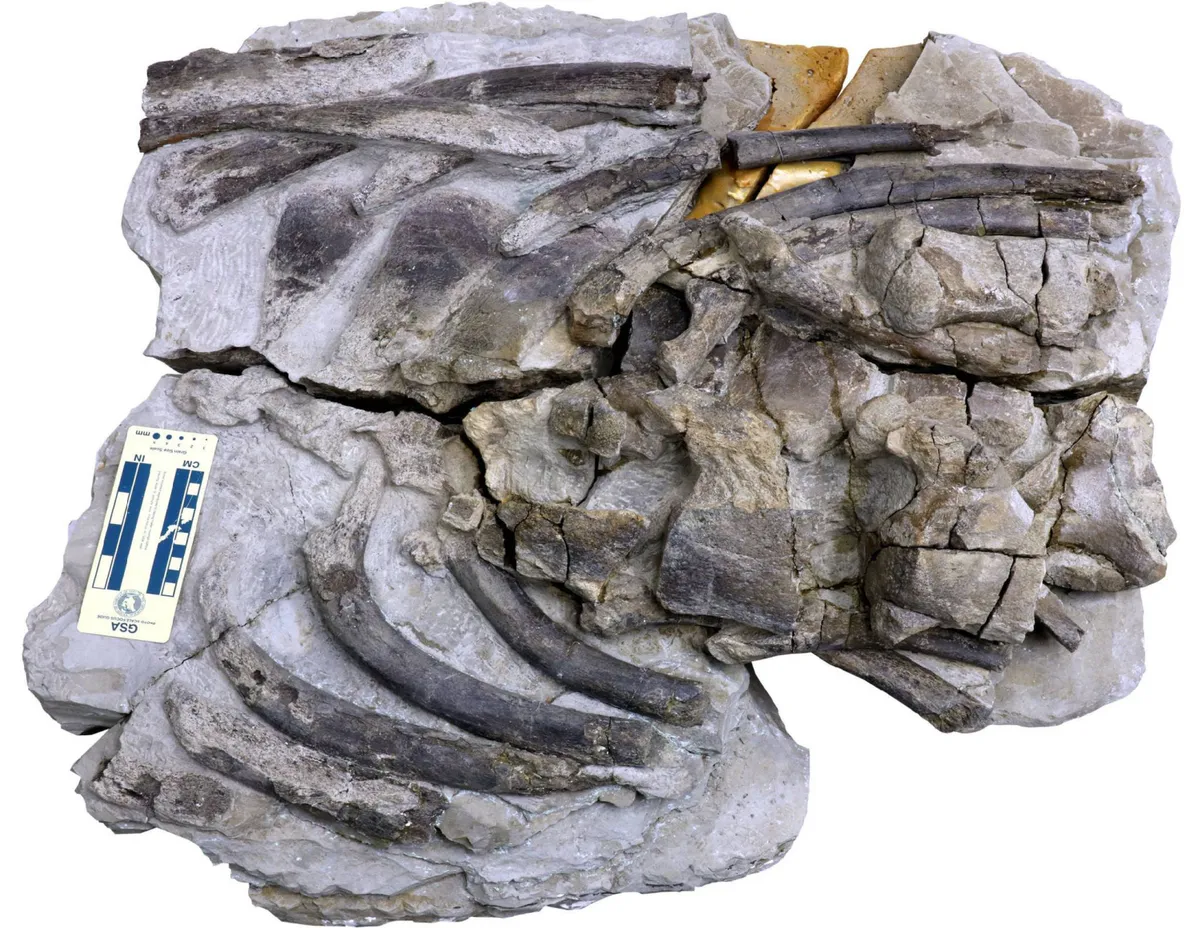
Whale fossils about 15.5 million years old discovered in Japan’s Gunma Prefecture have been identified as Miophyseter gunmaensis, a previously unknown sperm whale species. The findings appeared online in August in the U.S.-based Journal of Vertebrate Paleontology.
The species combined ancient and modern characteristics. A pronounced hollow in its skull is thought to have provided resistance to pressure in deep water, while developed throat bones enabled suction feeding. Its teeth were more numerous than those of modern sperm whales, suggesting it also captured food by biting.
Toshiyuki Kimura, a curator at the Gunma Museum of Natural History, said modern sperm whales feed by suction at depth, whereas their ancestors bit prey in shallower water.
Local fossil enthusiasts found the remains of three individuals between 1994 and 2011 beside Tone River tributaries in Tomioka and Annaka. An almost complete skeleton is believed to belong to a calf 3 to 4 meters in length.
Japan has now yielded three newly identified sperm whale species, with earlier discoveries in Nagano and Aichi prefectures. The Gunma specimens are on display through Dec. 13 at the Gunma Museum of Natural History in Tomioka.