Hubble observations challenge theory of how ultraviolet light escapes galaxies
Researchers found that galaxies with the fastest winds released the smallest share of ionizing radiation, contrary to expectations.
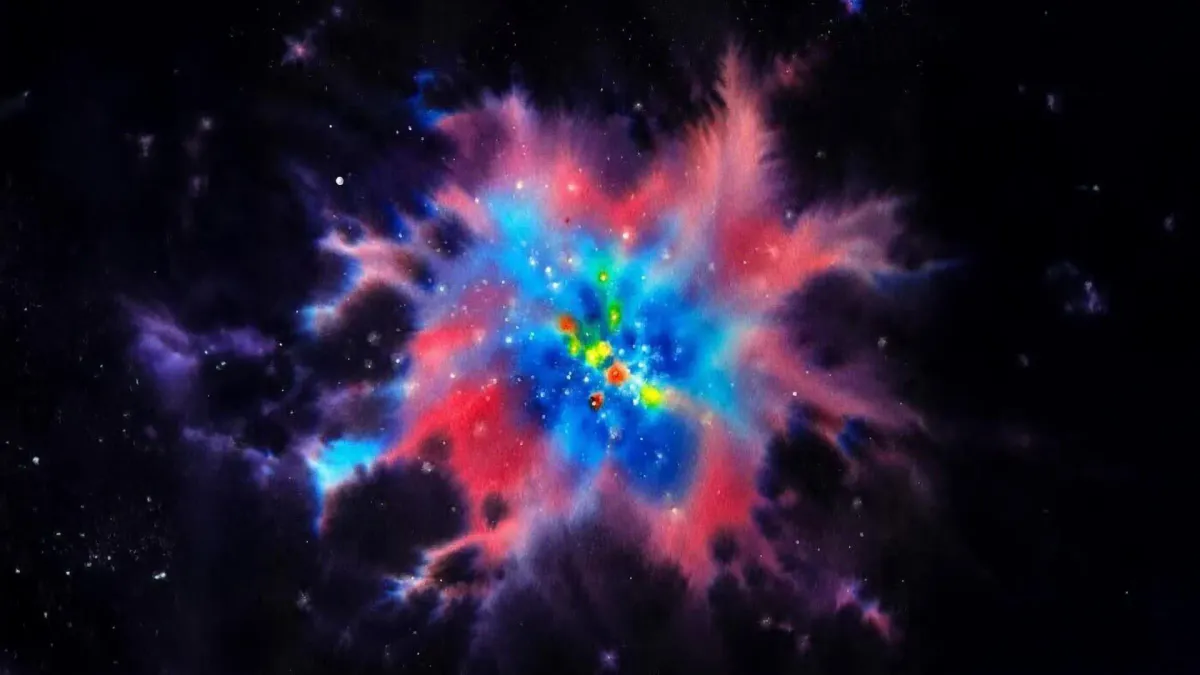
Powerful winds from stellar explosions may obstruct ultraviolet radiation rather than help it escape galaxies, according to an international team using observations from NASA's Hubble Space Telescope. The study, published in Nature Astronomy, challenges an explanation for how radiation reached the space between galaxies in the early universe.
The researchers studied nearby starburst galaxies, where stars are forming intensely. They used patterns in the galaxies' spectra to determine gas velocities and compared those measurements with the fraction of hydrogen-ionizing light escaping. Faster winds were associated with a smaller escaping fraction.
Supernova-driven winds had been expected to push gas aside, opening routes for radiation. Instead, the explosions appear to rearrange surrounding gas and dust so that more radiation is blocked, said study senior author Stephan McCandliss, who directs Johns Hopkins University's Center for Astrophysical Sciences.
The findings favor the possibility that young, massive stars release radiation beyond their galaxies before exploding. The researchers said smaller winds and other processes near young stars might open gaps in surrounding gas before supernovae occur.
The work could help explain reionization, a transformation beginning approximately 13 billion years ago when radiation stripped electrons from intergalactic hydrogen, making space more transparent to ultraviolet light. Research leader Cody Carr, now a postdoctoral researcher at the University of Michigan, and colleagues are requesting further Hubble observations to check for similar patterns in additional galaxies.