
Antarctic ozone hole ranks seventh-largest in 2026
NASA and NOAA scientists linked the expansion to an unusually strong polar vortex but said the ozone layer's long-term recovery remains on course.
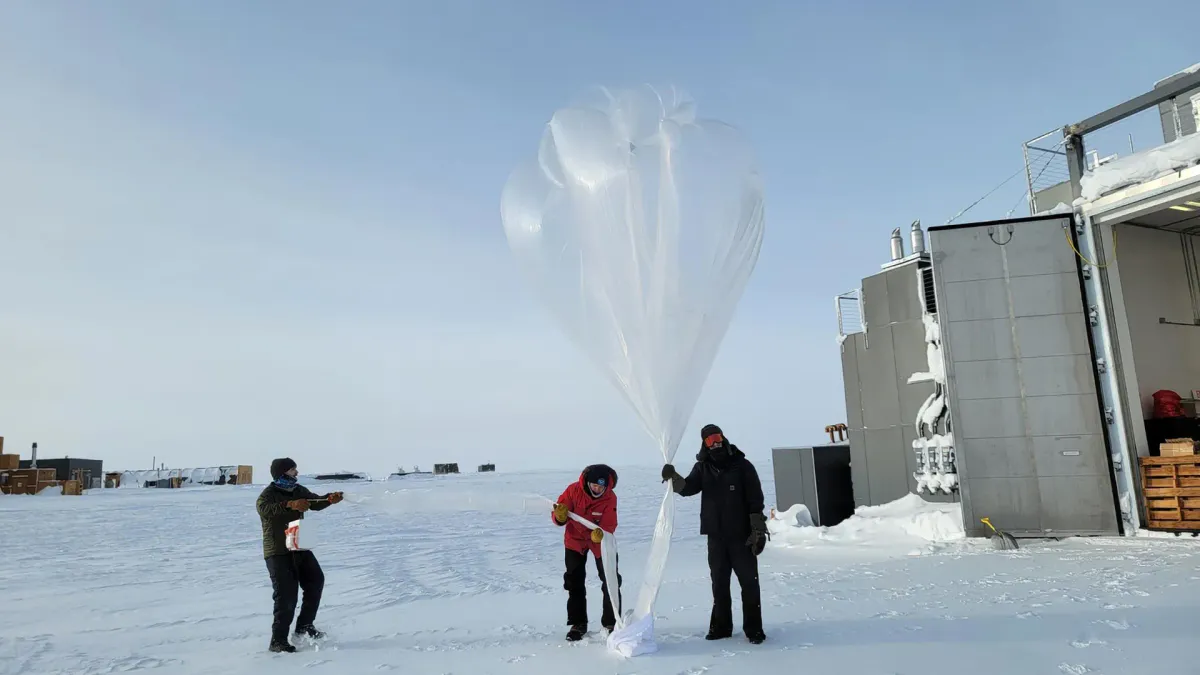
An unusually powerful circulation of winds over Antarctica pushed the 2026 ozone hole to the seventh-largest seasonal average recorded across 48 years, NASA and NOAA scientists said. They said the expansion did not reverse the ozone layer's gradual recovery.
From September 7 through October 13, 2026, its area averaged approximately 9.6 million square miles (25 million square kilometers). Its greatest extent came on September 18, at 10.5 million square miles (27.1 million square kilometers).
Amy Butler, a research scientist at the NOAA Chemical Sciences Laboratory, said atmospheric weather systems that normally disrupt the polar vortex were especially weak during August and September. The resulting circulation sustained cold conditions across a wider area, helping clouds form where chlorine and bromine can drive ozone destruction.
The geographic expansion was not accompanied by ozone losses as extreme as those measured in record events 10 or 20 years earlier. Instruments above the South Pole recorded the year's lowest ozone concentration on October 17: 105 Dobson units. The record low there was 92 Dobson units in October 2006.
Scientists credited restrictions under the 1987 Montreal Protocol with limiting the damage. Stephen Montzka, a senior scientist at NOAA's Global Monitoring Laboratory, said Antarctic stratospheric chlorine linked to ozone-depleting chemicals had fallen approximately one-third from peak levels in the 1980s. Although these substances can persist for decades, scientists still expect recovery of the Antarctic ozone hole by the 2070s.