
Global Leading Landfill Leachate PFAS Treatment Solutions Provider: A Guide for Waste Management Operators
Sep 29, 2026
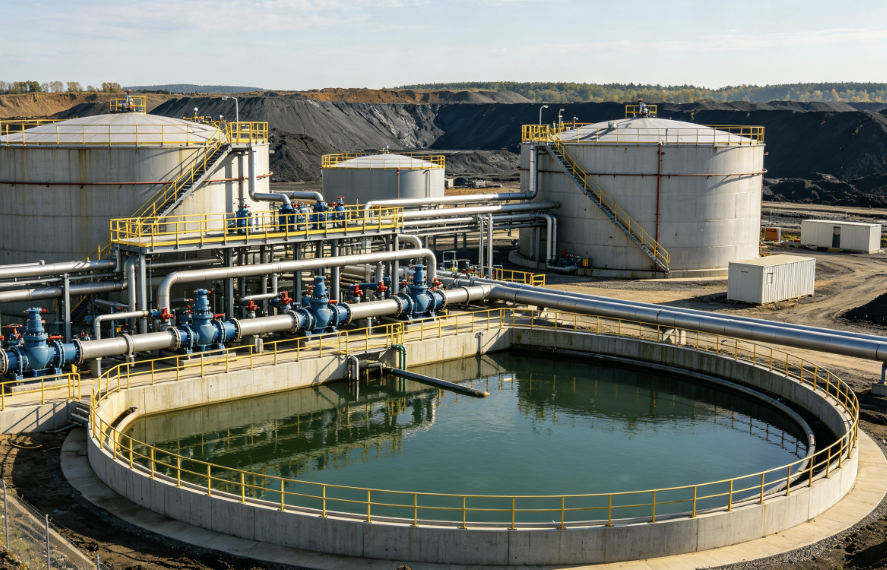
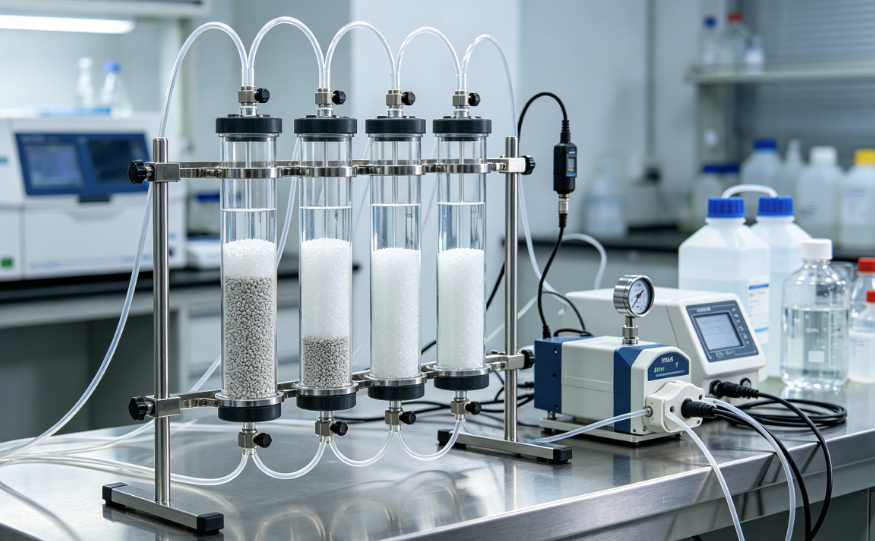
Xian, Shaanxi Sep 28, 2026 (Issuewire.com) - Municipal and industrial waste facilities worldwide face unprecedented environmental scrutiny as regulatory agencies tighten discharge limits on toxic synthetic chemicals. Environmental managers now contend with stringent thresholds for per- and polyfluoroalkyl substances, often requiring contaminant reductions down to single-digit parts-per-trillion levels. Managing these contaminants within landfill runoff presents unique technical challenges due to complex water chemistry. To achieve continuous compliance, facility directors increasingly rely on specialized separation technologies engineered by a Global Leading Landfill Leachate PFAS Treatment Solutions Provider (https://www.seplite.com/pfas-removal/). Implementing robust separation frameworks enables plant operators to meet evolving environmental standards while maintaining stable operational budgets. Consequently, understanding the underlying mechanisms of modern adsorption media becomes essential for long-term site viability. Navigating the Complex Matrix: Why Landfill Leachate Demands Next-Generation PFAS Removal Landfill leachate represents one of the most difficult aqueous matrices to treat in modern environmental engineering. Rainwater percolating through decaying waste gathers a dense cocktail of dissolved organic matter, inorganic salts, heavy metals, and synthetic compounds. Within this matrix, per- and polyfluoroalkyl compounds--commonly referred to as PFAS or "forever chemicals"--exhibit extreme chemical stability due to their strong carbon-fluorine bonds. Environmental authorities now mandate strict discharge limits because these compounds bioaccumulate in ecosystems and pose serious long-term health risks. Traditional water treatment technologies frequently fail when applied directly to raw or partially treated leachate. For example, Granular Activated Carbon systems suffer from rapid organic fouling and competitive adsorption. High background levels of Total Organic Carbon saturate activated carbon pores, forcing operators to replace media frequently at exorbitant costs. Similarly, Reverse Osmosis membranes can separate PFAS molecules, but they generate massive volumes of liquid concentrate that require costly secondary treatment. Furthermore, high salinity and scaling agents quickly clog membrane surfaces, leading to frequent downtime. Therefore, waste management facilities require advanced separation media that target synthetic fluorinated compounds without dying prematurely in high-TOC environments. Decoupling Matrix Interference: Selective Ion Exchange Mechanics with SEPLITE® Resins Specialized ion exchange resins offer a highly effective alternative by decoupling target contaminant capture from general organic background loading. Engineered strong base anion resins utilize fixed quaternary ammonium functional groups paired with tailored polymer matrices. These specialized structures operate through a dual-mechanism approach. First, electrostatic forces draw negatively charged PFAS heads to the positively charged functional sites. Second, hydrophobic interactions bind the fluorinated carbon tails to the crosslinked polystyrene backbone. This combined sorption mechanism enables the resin to selectively capture both long-chain compounds, such as PFOA and PFOS, and elusive short-chain variants. Under high background salinity conditions, conventional anion resins often exhaust quickly as chloride and sulfate ions occupy active sites. In contrast, advanced media such as the SEPLITE LSI 106G series maintain exceptional target selectivity. The uniform bead structure and targeted pore size distribution prevent large humic molecules from blocking access to internal functional groups. Moreover, ion exchange resins exhibit much faster sorption kinetics than standard carbon beds. This rapid mass transfer allows design engineers to operate systems at significantly higher empty bed contact times and smaller column volumes. As a result, facilities achieve target reductions down to non-detectable levels while reducing overall footprint requirements by over fifty percent. Synergistic Pretreatment Architecture: Safeguarding Resin Bed Life & Continuity Although advanced ion exchange resins possess high selectivity, prolonged operational lifespan depends heavily on proper upstream protection. Unfiltered landfill leachate contains suspended solids, emulsified oils, and high molecular weight organic acids that can foul resin beads over time. Therefore, modern facility designs incorporate a multi-barrier pretreatment architecture upstream of the polishing resin columns. Initial treatment stages typically employ chemical coagulation, dissolved air flotation, or sand filtration to reduce total suspended solids. Following primary clarification, biological treatment or organic scavenger resins remove broad-spectrum organic molecules. In many complex industrial sites, operators integrate these stages into comprehensive wastewater treatment and reuse solutions (https://www.seplite.com/wastewater-treatment-reuse/) that reclaim process water while isolating concentrated waste streams. Incorporating organo-clay or sacrifice carbon beds directly before the final resin vessels further shields the media from oil and grease contamination. This structured multi-stage design ensures that downstream ion exchange columns receive consistent water quality, thereby extending bed life, maintaining lower pressure drops, and preventing premature breakthrough. Lifecycle Economics & Secondary Waste Optimization: Maximizing Operator TCO Evaluating treatment technologies requires a thorough analysis of Total Cost of Ownership rather than simple capital expenditure comparisons. While specialized synthetic resins represent a higher initial capital investment than traditional carbon media, their significantly higher operating capacity delivers lower long-term expenditures. Resin beds typically treat exponentially more bed volumes of water before reaching breakthrough, drastically reducing media turnover frequency. Consequently, operators spend significantly less on media freight, changeout labor, and system downtime over a multi-year operating lifecycle. Furthermore, secondary waste management remains a major cost driver in PFAS remediation projects. Spent treatment media laden with toxic fluorinated compounds must undergo high-temperature incineration or secure hazardous landfill disposal. Because selective anion resins achieve far higher mass loading per unit volume than activated carbon, they generate a fraction of the solid waste volume upon exhaustion. Facilities can choose between single-use high-capacity resin configurations that minimize handling risks or regenerable systems that concentrate contaminants into small waste fractions. Ultimately, generating smaller spent media volumes substantially lowers hazardous transport and destruction fees, providing landfill operators with a predictable and sustainable operational cost structure. From Lab Bench to Turnkey Execution: Sunresin's Integrated EPC Capabilities & Quality Safeguards Delivering reliable separation performance in unpredictable leachate environments demands both advanced material science and robust engineering execution. As a global technology provider, Sunresin (Sunresin New Materials Co. Ltd.) (https://www.seplite.com/sunresin-profile/) integrates material manufacturing with full-scope system engineering. Operating advanced production complexes with an annual resin capacity of 100,000 cubic meters, the enterprise maintains rigorous quality controls accredited under ISO9001 and international potable standards including NSF/ANSI 61. Listed on the Shenzhen Stock Exchange under code SZ300487, the company provides financial stability and long-term technical backing for large-scale municipal and industrial environmental projects. The company executes engineering projects through a systematic Engineering, Procurement, and Construction framework. Process engineers begin each engagement by analyzing site-specific water samples in specialized separation laboratories. Based on detailed contaminant fingerprinting, research teams select or customize the optimal resin matrix and design tailored column geometry. Following process validation, manufacturing teams fabricate modular skid-mounted equipment, integrate automation controls, and manage complete logistics delivery. Field specialists subsequently oversee site installation, system commissioning, and operator training. Furthermore, technical support teams deliver ongoing performance monitoring and rapid-response field assistance throughout the facility lifecycle. Partnering with Sunresin: Elevating Leachate Compliance & Environmental Stewardship Achieving long-term regulatory compliance requires moving beyond standardized off-the-shelf equipment toward customized, data-driven separation strategies. Environmental managers can evaluate potential treatment performance through structured bench-scale testing and mobile pilot sorption modules prior to full-scale capital commitment. These pilot studies establish exact breakthrough curves, optimize pretreatment configurations, and verify operating cost projections under actual field conditions. By collaborating with an experienced separation technology partner, waste management operators transform complex leachate liabilities into manageable, compliant discharges. Sunresin continues to pioneer advanced separation materials and equipment solutions, helping industrial and municipal clients protect surrounding watersheds from persistent chemical pollutants. Through continuous innovation, rigorous manufacturing standards, and dedicated engineering support, the enterprise provides the waste management industry with a reliable path toward sustainable environmental stewardship. For more technical specifications and solution details, visit: https://www.seplite.com/.
Source :Sunresin New Materials Co. Ltd.
This article was originally published by IssueWire. Read the original article here.
More News
![aritcles[0].caption](https://i2-prod.manchestereveningnews.co.uk/incoming/article34780852.ece/ALTERNATES/s98/850097055_1653055336465264_795527578896272045_n.jpg)
M56 traffic LIVE as police shut motorway near Manchester Airport following incident
Queues are building on the M56 and M60

The Albanese government wants to cash in on our military history, and once it's gone we'll never get it back: PETER VAN ONSELEN
Once the money is spent, the military will still need funding. The difference is that Australians will no longer own the land.

Venezuelan singer and composer's body found tied up at bottom of Florida pool in 'suspicious' death
Venezuelan singer and composer Gus Ormo was found dead at the bottom of his backyard swimming pool in Weston, Florida, amid reports he had been tied up.

Moment distraught woman begs French rioters not to loot shop and 143-year-old town hall is incinerated as violent protests spread across Europe
The heartbreaking moment was caught on video, as the woman pleaded with a crowd of young male rioters not to loot her shop - a plea they ignored.

Man who claimed ICE agents took his wife is arrested for her murder after burned remains are discovered
Her 28-year-old husband initially told authorities that ICE agents had taken his wife into custody while she checked the mail.

Children among two dead and ten critically injured after mom 'crashed pickup into soccer field while her kids were in the back'
A black pickup truck reportedly plowed through youth soccer fields at Wichita's Stryker Sports Complex, striking multiple people. Witnesses have described horrifying scenes.

The Greens are facing a run of tests in Shoebridge’s first weeks as leader
An expert says the new Greens leader is facing "a real test" after a chain of events has threatened his position.

Mom and stepdad lied and said daughter, 9, was hit by car... now they're accused of beating her to death
India Miller, 27, and Sean Scott, 45, face murder charges after calling 911 last Tuesday to their Paulsboro home and claiming Maya Thomas, 9, had been struck by a vehicle.

Read jaw-dropping new Alexander brothers letters: Family begs judge for light sentences for penthouse predators but even their own brother slams them... as one's model wife is spotted out with a neighbor
Prosecutors are seeking life imprisonment for all three men, while officials have recommended 195 years for Oren, 39, and 180 years each for his twin Alon and their older brother Tal, 40.

Vance dodges Trump voter's fury over devastating gas prices by blaming Biden and Iranian 'terrorists'
JD Vance blamed Joe Biden and Iranian 'terrorists' for sky-high gas prices after a two-time Trump voter confronted him at a CBS town hall that aired Saturday night

Donald Trump, Elon Musk and Pete Hegseth are prime suspects behind decision to 'slow down' Starlink satellite system in Ukraine
Starlink satellites, operated by Mr Musk's SpaceX, provide high-speed internet to Ukraine's military which allow it to defend itself against Russian drone and missile attacks.

Trump women turn on Kimberly Guilfoyle: As their brutal true feelings about Don Jr's ex leak out... friends say this is even more devastating than Greek banishment
Kimberly Guilfoyle stepped down as Greek ambassador earlier this week but sources tell the Daily Mail not everyone in the tight-knit Trump fold have have sympathetic about her fall from grace.
YOUR NEWS, OUR NETWORK.
Do you have Great News you want to tell the world?
Be it updates about your business or your community, you can make sure that it’s heard by submitting your story to our network reaching hundreds of news sites across 6 verticals.